
Know whether every repair worked.
Stratio keeps monitoring vehicle condition after the work order closes, helping teams confirm whether the issue has cleared and detect recurrence before the same fault causes further disruption.
.webp)
The world’s leading public transport operators run Stratio





A work order can close before the fault is gone.
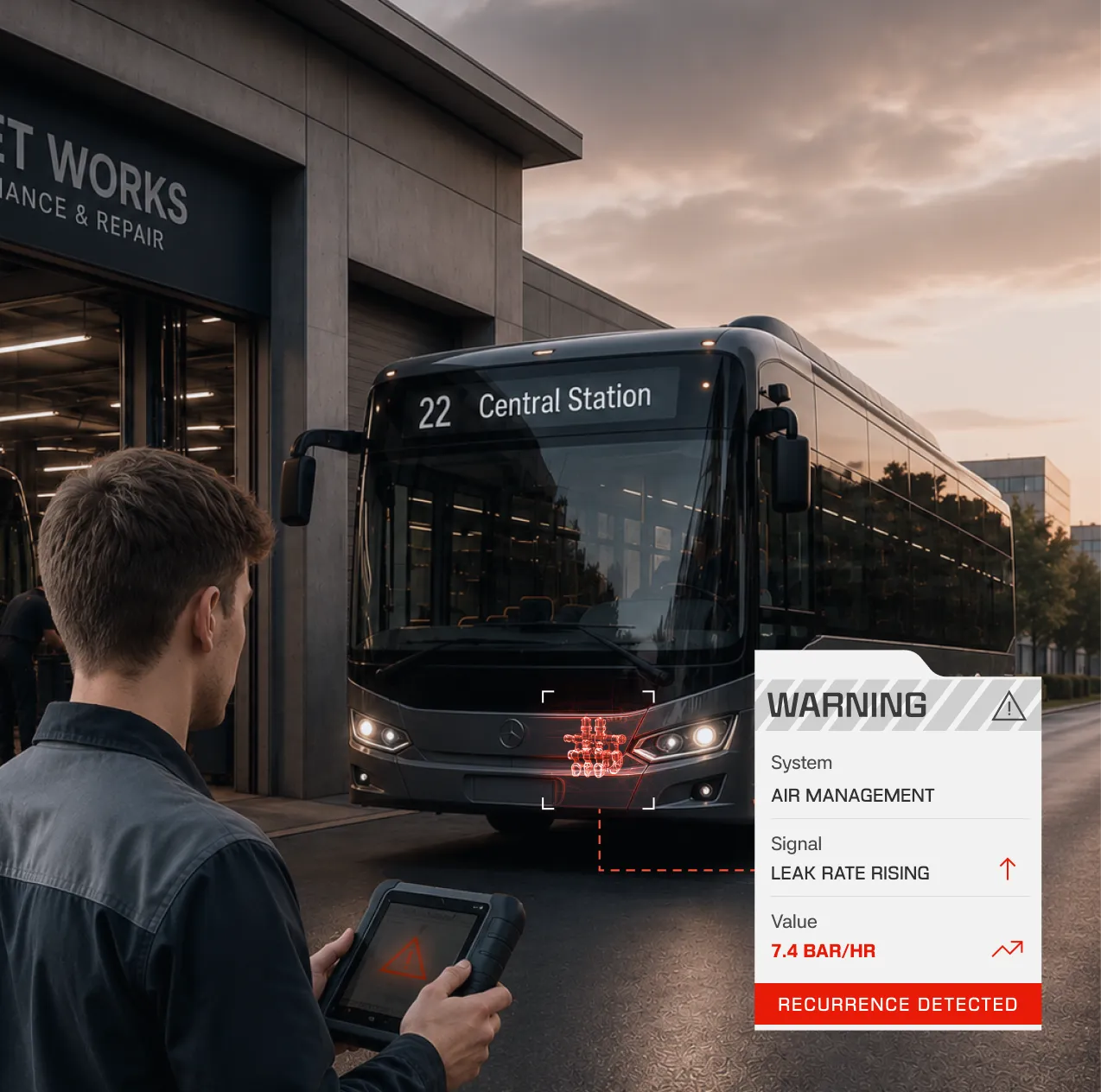


Validate the repair with data, not assumption
Stratio continues monitoring the vehicle after the repair is completed. If the condition clears and the relevant signals stabilize, the workshop can see whether the repair held. If the issue remains or begins to return, Stratio flags it before it causes more disruption.
.webp)


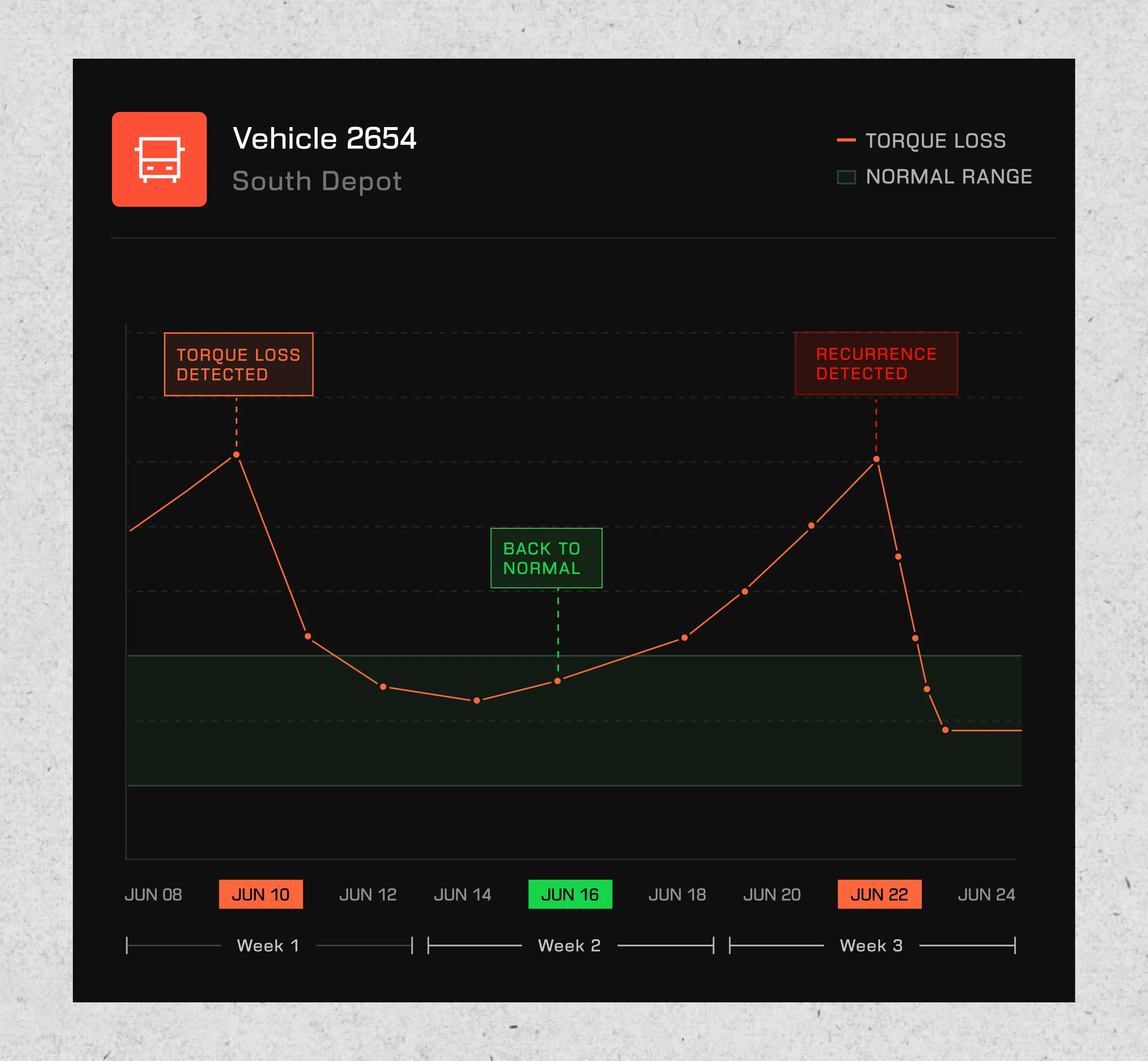
See whether the issue returns
Stratio continues monitoring the vehicle after the work order closes, so the workshop can see whether the condition that triggered the repair has cleared.
.svg)

detected

This gives the workshop evidence that the repair held, or an earlier warning that the issue remains.
Repairs verified. repeat failures caught earlier.
.webp)


.svg)
.svg)
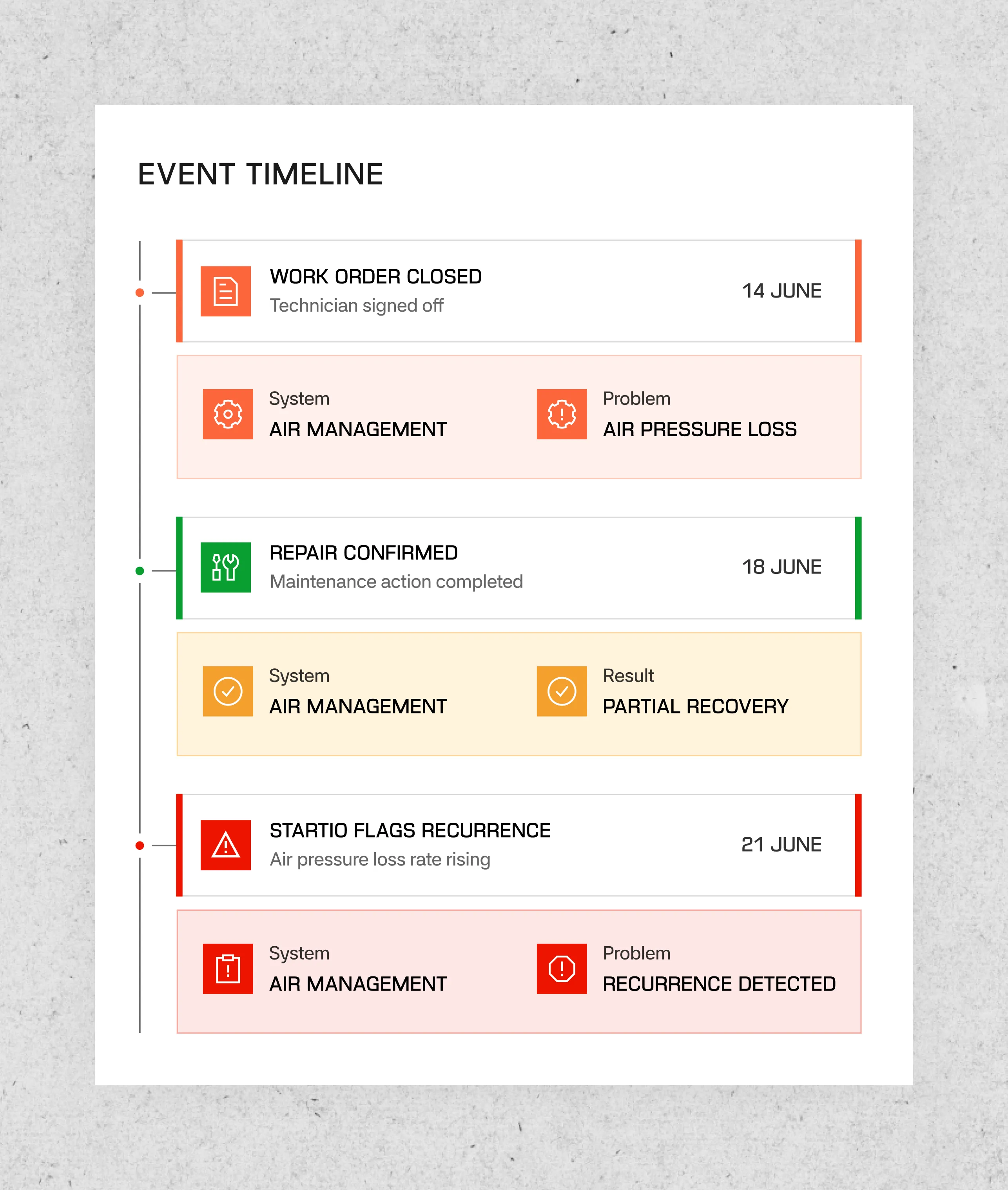
The air leak that came back after sign-off.
A workshop acted on the evidence it had and closed the job. Stratio kept measuring after the bus returned to service, saw the relevant signal drift again, and flagged recurrence before the second breakdown.
That is the point of validation: it catches what nobody can see once the bus leaves the bay.
.webp)
/// client testimonials
Real operators, real fleets. Real outcomes.
1 / 3


We adopted Stratio in 2020 to test whether failure prediction was real. The results speak for themselves: cost per km decreased, time between failures went up, and what began as a pilot in the Prague region is now a standard we keep expanding.
2%net savings per km operated
66.6%fewer towing interventions
33.3%improvement in planned-vs-unplanned maintenance ratio
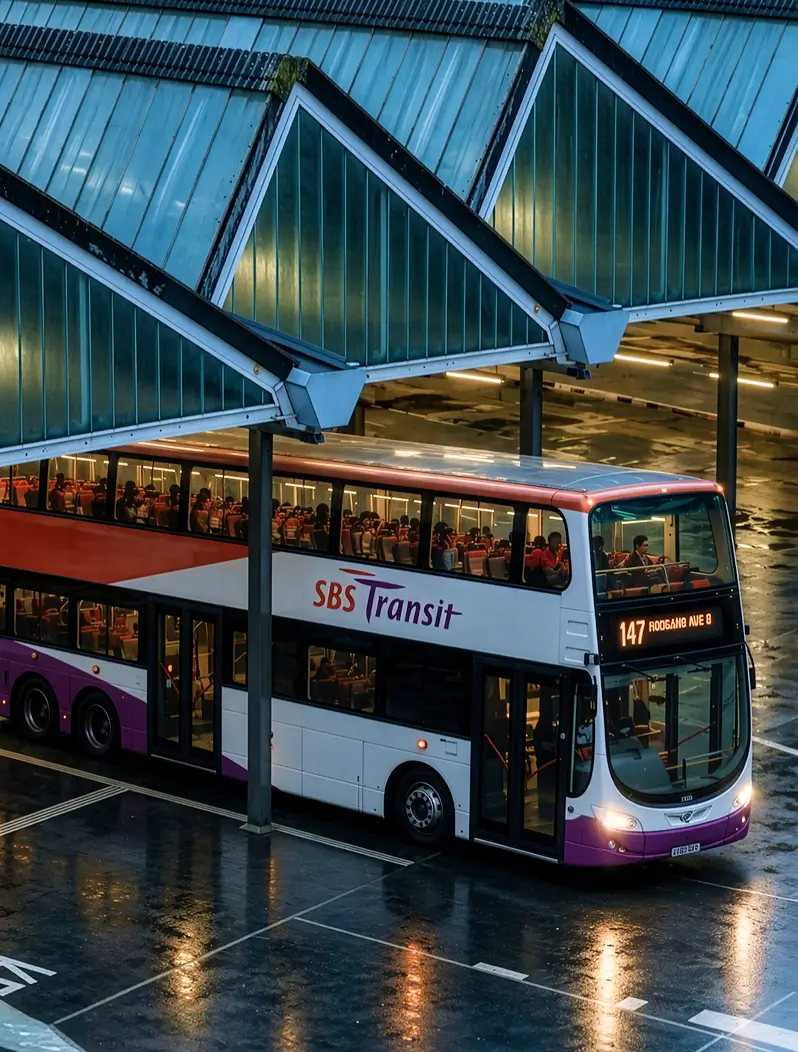

The Stratio Platform enables real-time fault detection and predictions for our buses. This allows for timely repair recalls with the workshops being alerted before actual breakdowns happen, reducing the occurrence of bus breakdowns in the process.
20%Fewer bus
breakdowns
62%Of Singapore’s bus
fleet covered
3000+Buses running on Stratio


The Stratio solution, which is already deployed on several Keolis networks in France, allows maintenance staff to view and address vehicle failures. This eliminates costly downtime, enabling us to provide an even more reliable, efficient and safe service for passengers.


Stratio’s technology is enabling us to operate more efficiently, both in the workshop and in day-to-day operations by preventing bus failures and scheduling preventive maintenance at exactly the right time. This helps reduce costs while increasing vehicle availability. All of this translates into higher service quality, minimizing route disruptions and providing a safer and more comfortable driving experience.
.webp)
See how Stratio validates repairs on a fleet like yours
// Frequently asked questions
Have any questions? We’ll get back to you in 24 hours.
How does Stratio know whether a repair worked?
Stratio keeps monitoring the condition that triggered the repair. If the condition clears and the supporting signals stabilize, the repair can be treated as verified. If the issue remains or begins to return, Stratio flags recurrence.
Does Stratio replace workshop sign-off?
No. The workshop still completes and closes the repair. Stratio adds post-repair vehicle evidence, helping the team see whether the underlying condition cleared or began to return after the bus went back into service.
What kinds of repairs can be validated?
Any repair tied to a measurable condition can be checked after the work order closes, including air-system leaks, charging anomalies, brake wear, thermal drift, and electrical-system deterioration.
Where does repair validation appear?
Validation status can sit with the condition report and maintenance workflow, so the team sees whether the repair held without opening a separate investigation.
Why does post-repair monitoring matter?
A repeat failure consumes workshop capacity, spare-fleet availability, parts, and operational time for a second time. Continued monitoring helps teams identify unresolved or recurring issues before they create another service disruption.