///
Preempt breakdowns

Catch the fault before it takes the bus off  the road

Diagnostic AI continuously analyzes vehicle condition across your fleet, identifying emerging faults early enough to prioritize intervention and prevent avoidable breakdowns
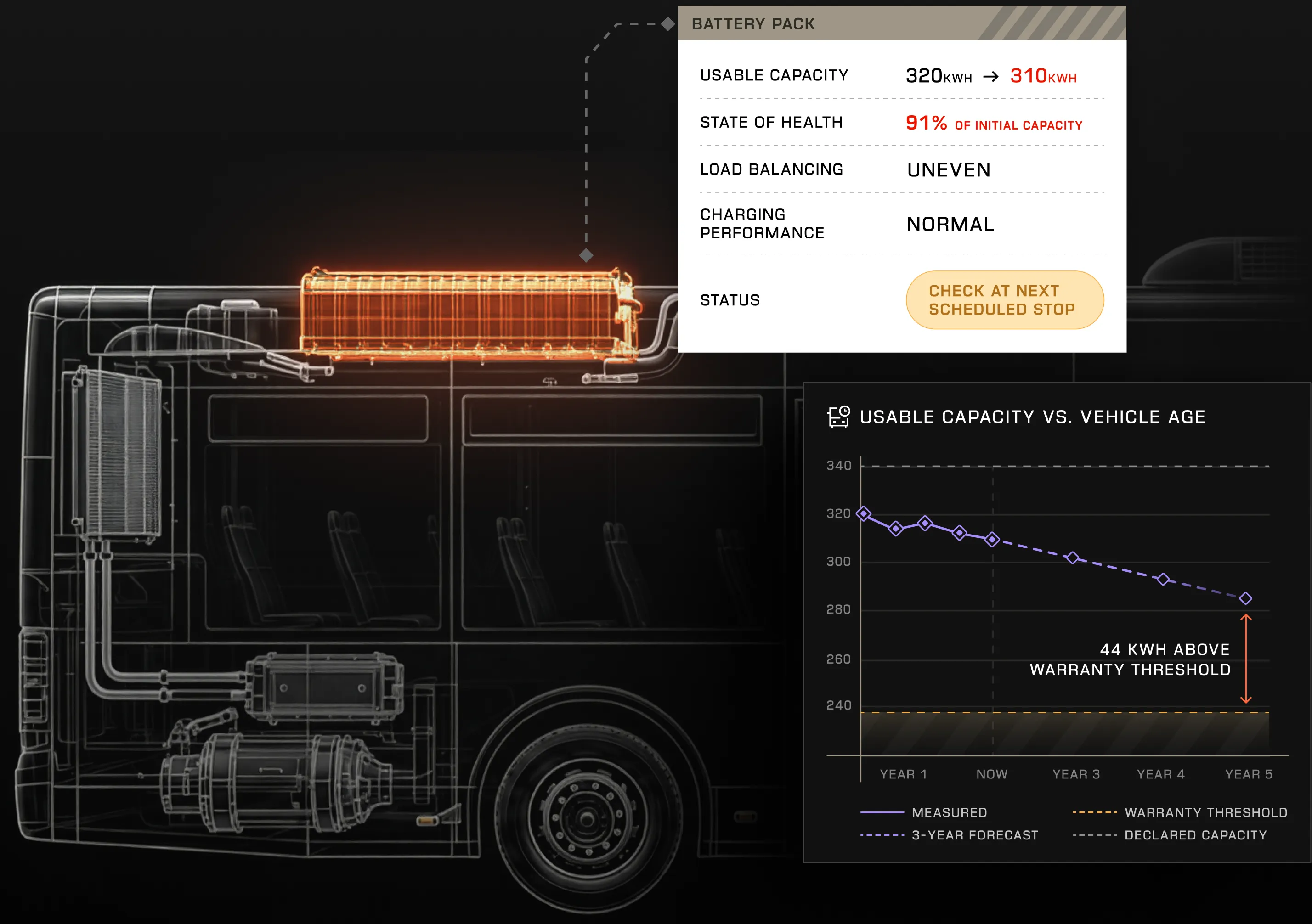
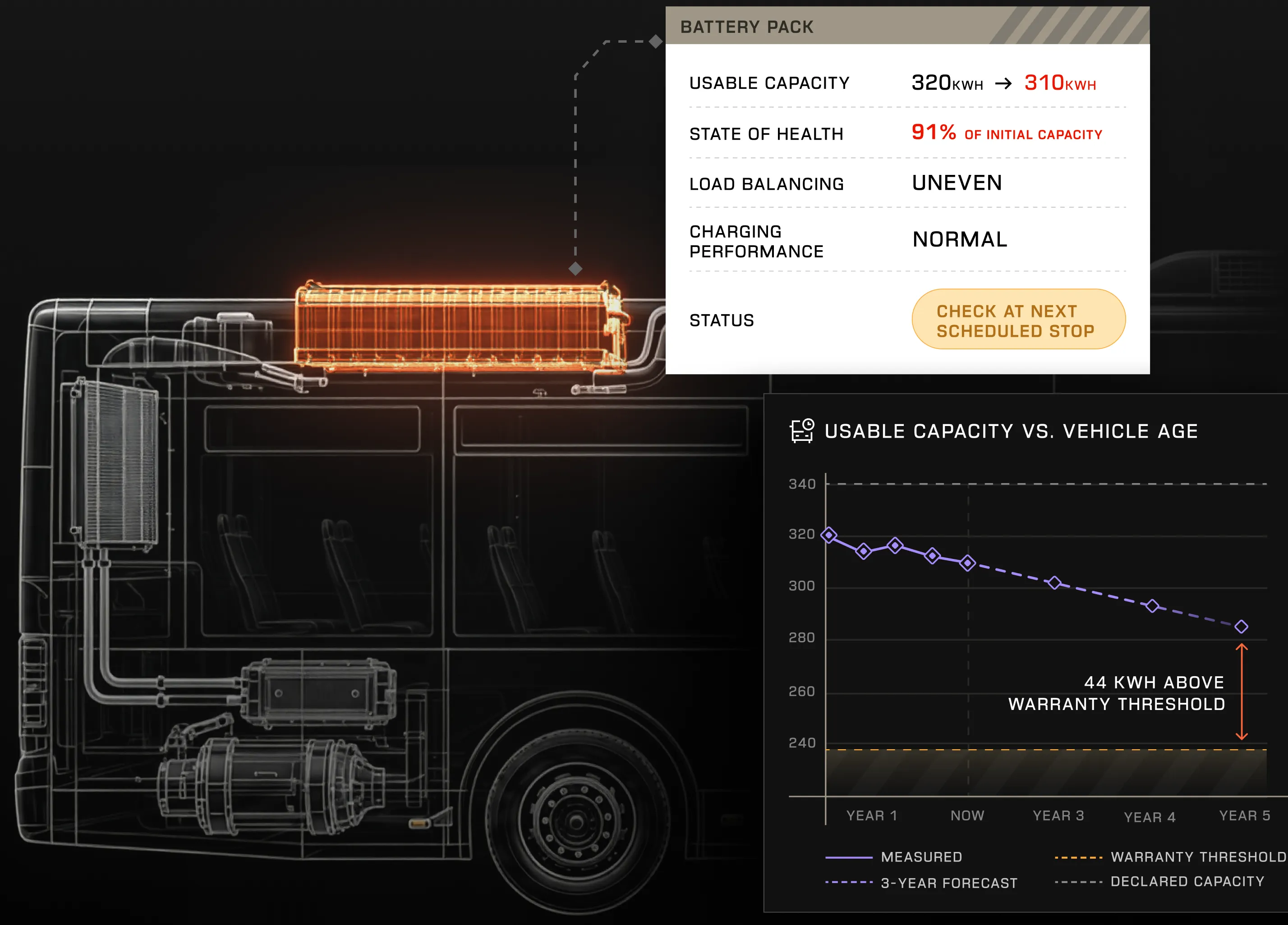
Diagram of a bus with the battery pack highlighted in orange on top, showing battery pack details: usable capacity reduced from 320 to 310 kWh, state of health at 91% of initial capacity, uneven load balancing, normal charging performance, and a status message to check at next scheduled stop. A graph labeled 'Usable Capacity vs. Vehicle Age' shows a gradual decline from 320 kWh to about 285 kWh over five years, remaining 44 kWh above warranty threshold. The graph includes measured data, a 3-year forecast, warranty threshold, and declared capacity lines.

The world’s leading public transport operators run Stratio

SBS Transit
arriva
KEOLIS
RATP GROUP

Every breakdown starts long before the bus stops

A fault develops for weeks before the warning light appears.
Thousands of vehicle signals, but no clear indication of which bus needs attention first.
A roadside recovery that could have been a planned workshop visit.
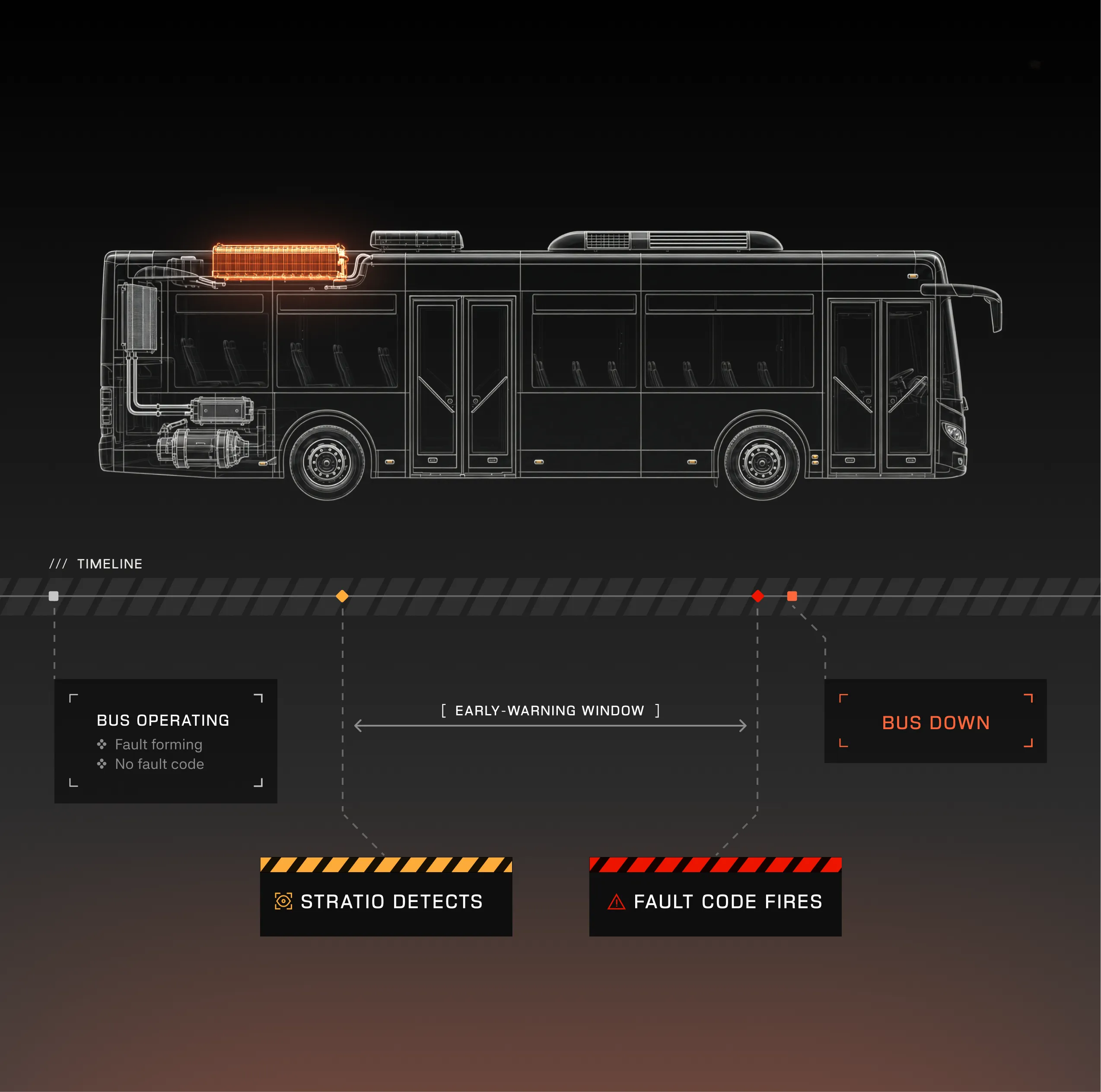
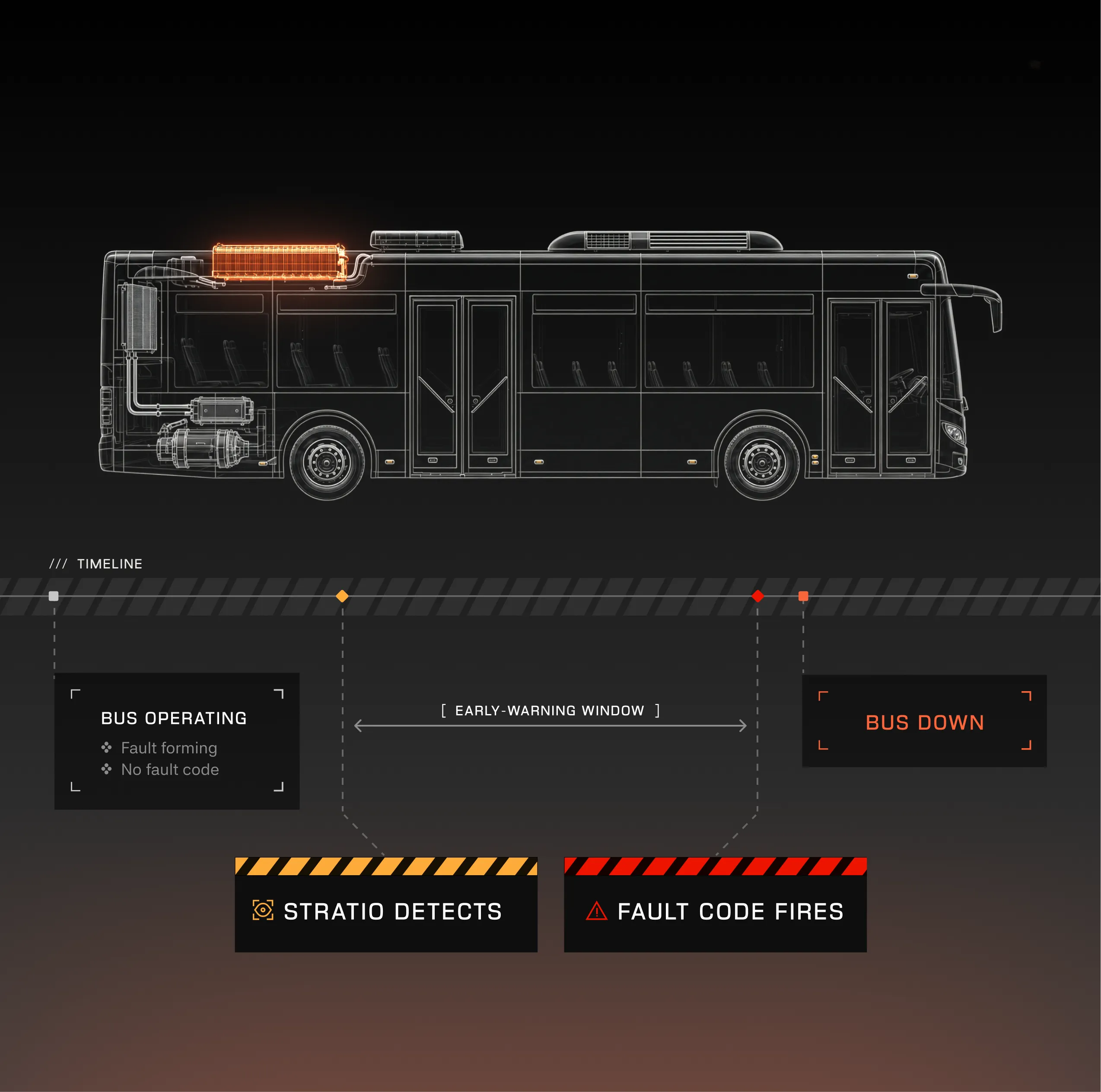
Most maintenance systems become useful only once a fault code fires. By then, the disruption has already happened.
Preventing breakdowns starts with understanding what is developing before conventional diagnostics recognise a fault.
Transparent side view of a bus showing an internal component highlighted in orange, with a timeline below illustrating an early-warning system that detects faults before a fault code fires and the bus goes down.

Detect the condition, not the consequence.

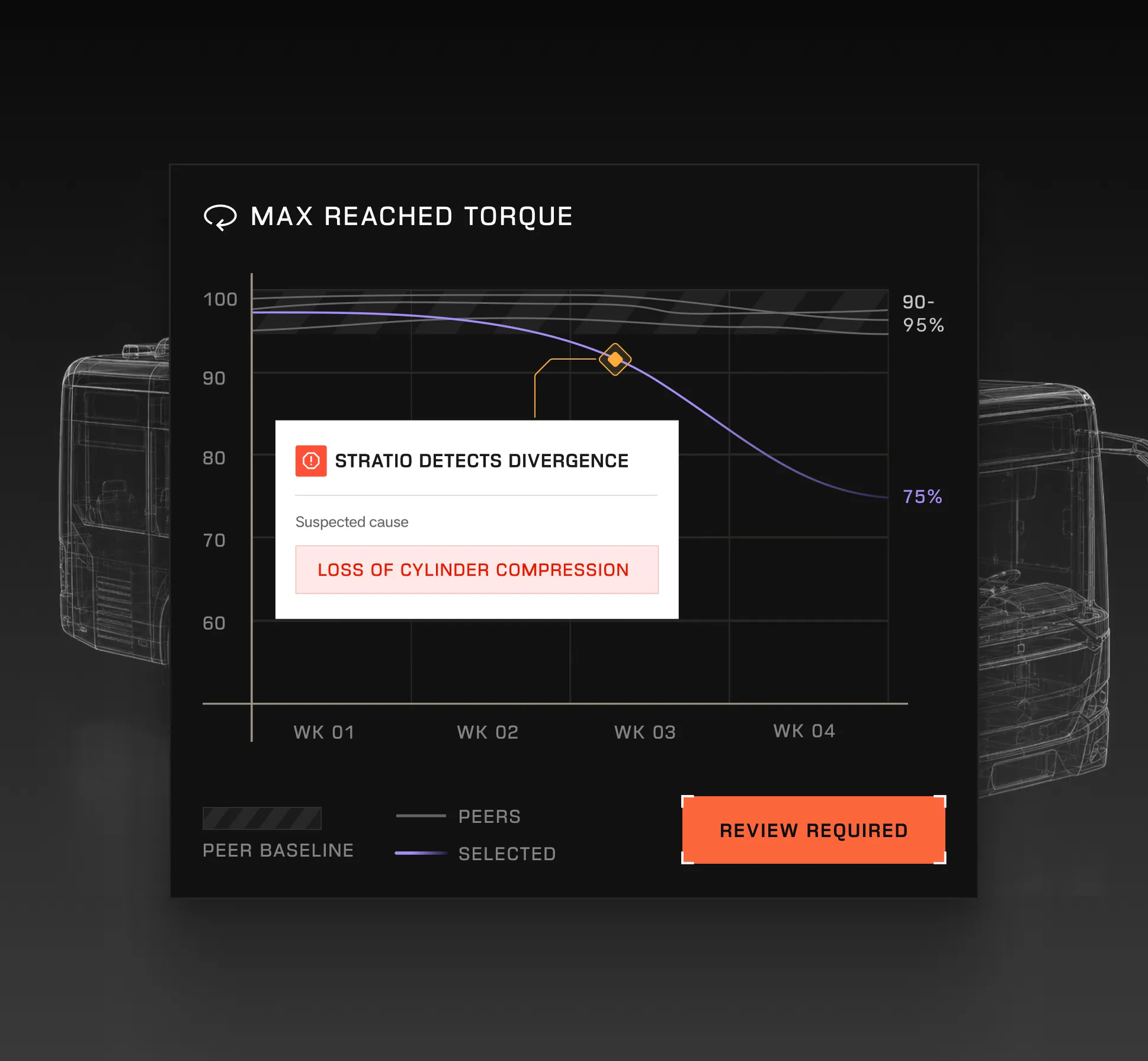
Vehicle conditions change continuously. Diagnostic AI monitors those changes over time, identifying developing faults while there’s still time to plan maintenance instead of responding to failure.
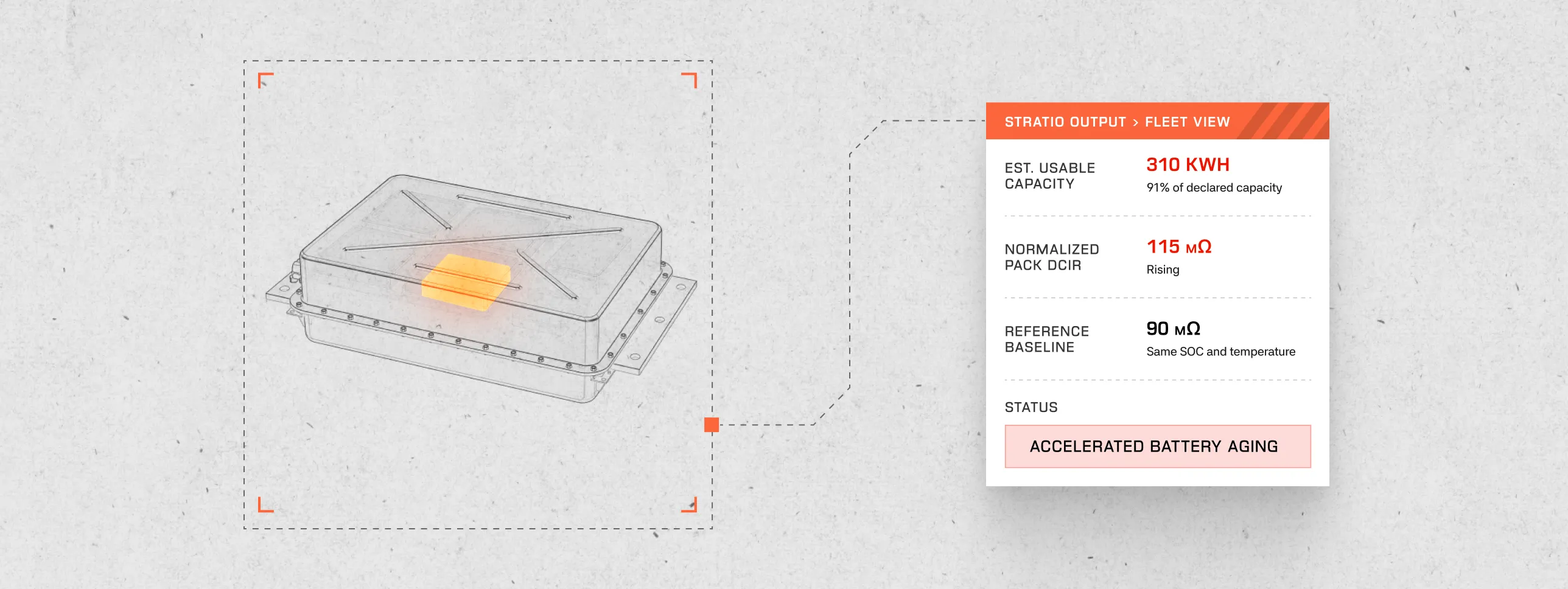
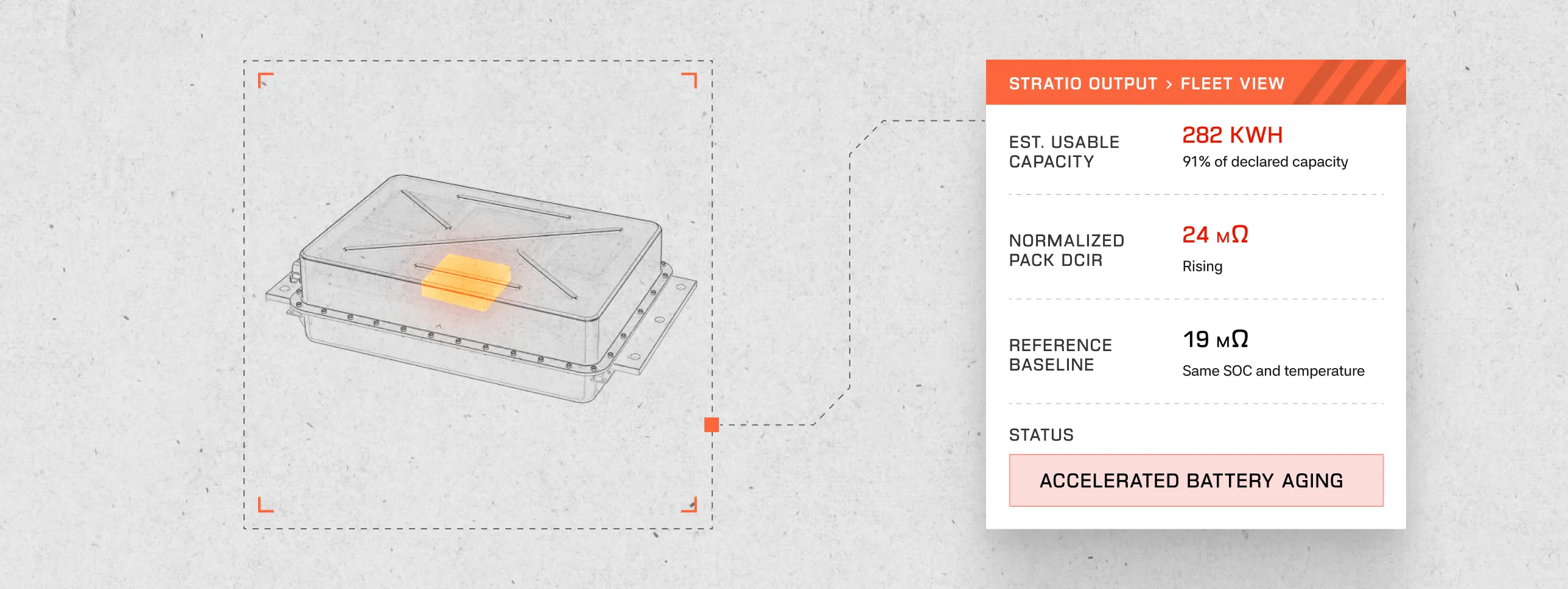
Diagram of a battery pack with a highlighted section in orange, connected by dashed lines to a data panel showing Stratio output fleet view with estimated usable capacity of 282 kWh (91% of declared capacity), normalized pack DCIR of 24 mΩ rising, reference baseline of 19 mΩ at same SOC and temperature, and a status indicating accelerated battery aging.

Every developing fault arrives ready for action

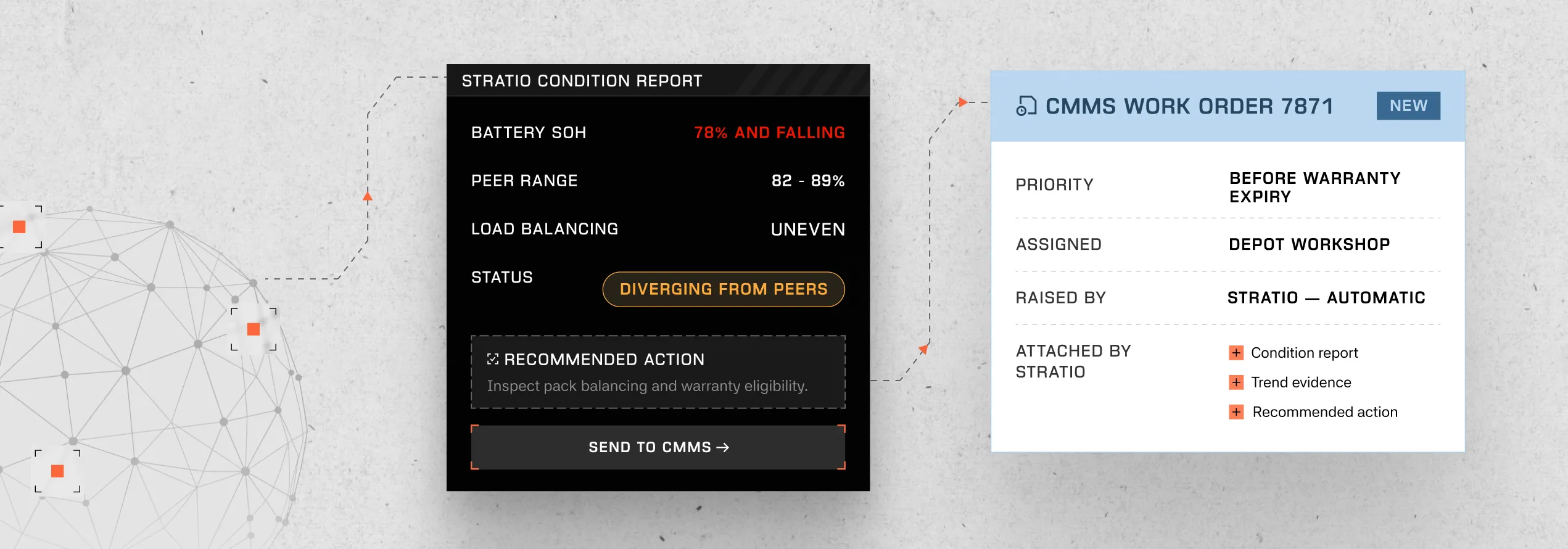
Every developing issue becomes a condition report, bringing together the diagnosis, supporting evidence, engineering reasoning, and recommended action before the vehicle reaches the workshop.

Every condition report shows:
What is developing
Why it matters
What to inspect
What to do next

More planned maintenance. Fewer operational surprises.
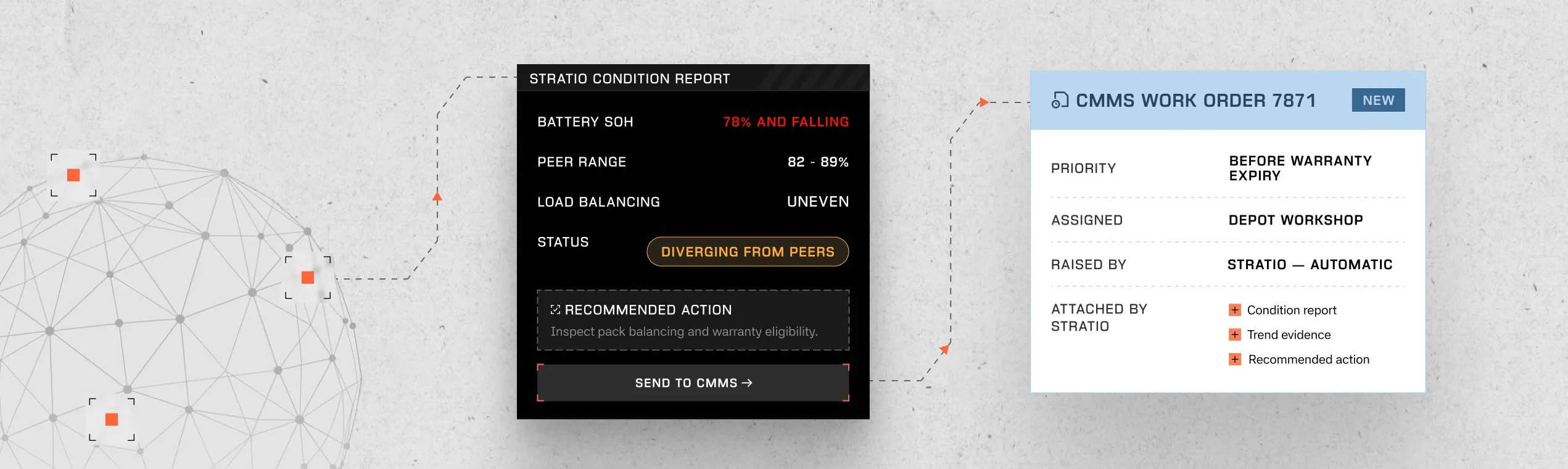
Diagram showing a battery condition report with 78% state of health falling, peer range 82-89%, uneven load balancing, and status diverging from peers, recommending inspection of pack balancing and warranty eligibility, linked to a new CMMS work order 7871 prioritizing before warranty expiry, assigned to depot workshop and raised automatically by Stratio with attached condition report, trend evidence, and recommended action.
Detect faults before they become breakdowns
Give operations teams earlier visibility into fleet health
Keep more buses available for service
Protect operational performance
Replace roadside recoveries with planned interventions

Six battery packs: replaced before the warranty expired

At one operating entity, Stratio identified six high-voltage battery packs degrading against the fleet baseline while they were still under warranty.

The workshop replaced every pack before the warranty period expired, avoiding unnecessary replacement costs and protecting the operator’s investment.

The same Diagnostic AI that detects emerging engine faults also identifies battery degradation before replacement becomes necessary.
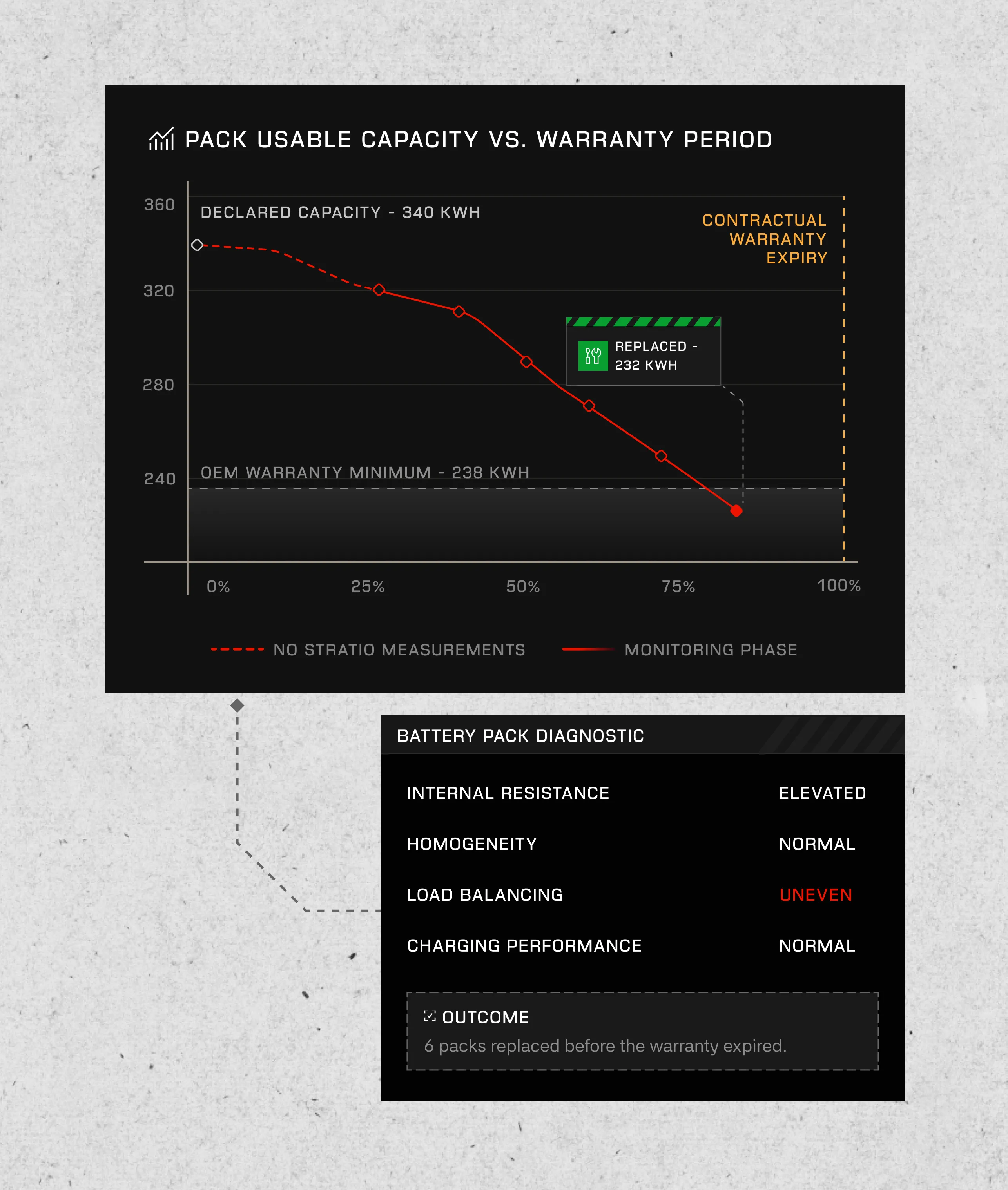
Graph showing pack usable capacity versus warranty period with a red line declining from about 340 kWh to below 240 kWh over 0% to nearly 90% warranty period. Declared capacity is 340 kWh and OEM warranty minimum is 238 kWh. A marked point indicates pack replacement at 232 kWh. Below the graph is a battery pack diagnostic table showing internal resistance as elevated, homogeneity normal, load balancing uneven, and charging performance normal. The outcome notes six packs were replaced before warranty expiry.

 ///      client
testimonials

Real operators, real fleets. Real outcomes.

1 / 3

Daniel Adamka,
managing Director,
ARRIVA CZ
arriva

We adopted Stratio in 2020 to test whether failure prediction was real. The results speak for themselves: cost per km decreased, time between failures went up, and what began as a pilot in the Prague region is now a standard we keep expanding.

2%net savings per km operated

66.6%fewer towing interventions

33.3%improvement in planned-vs-unplanned maintenance ratio
Daniel Adamka

managing Director,

ARRIVA CZ

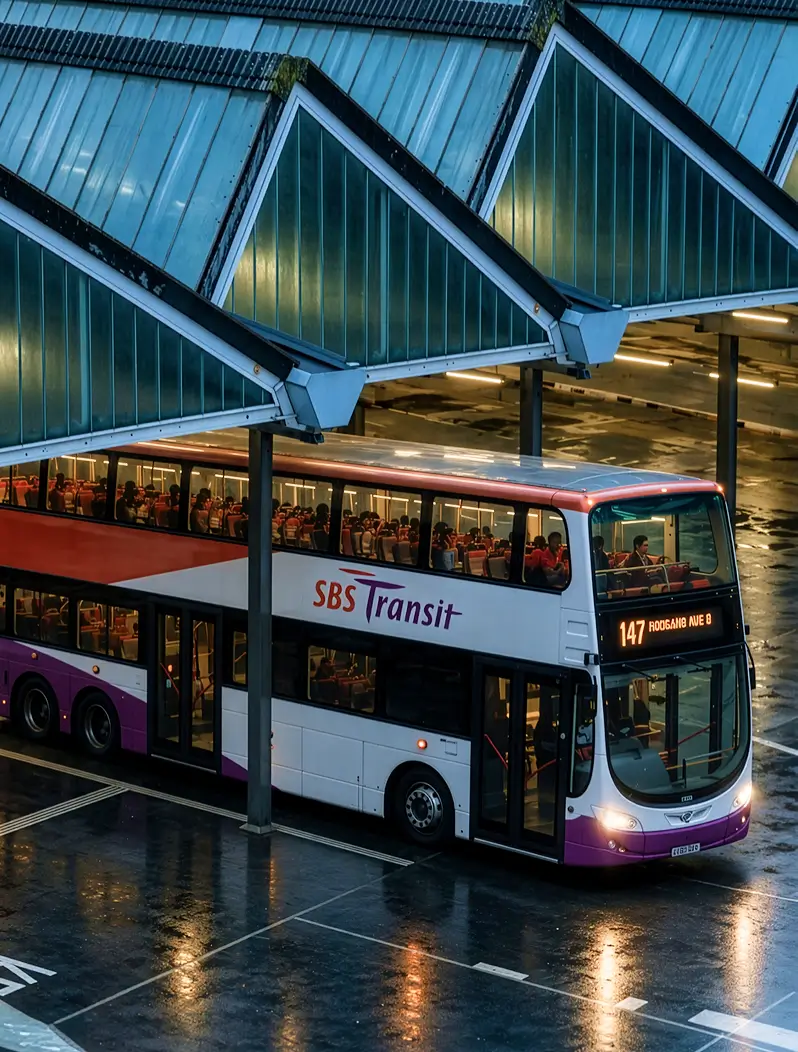
Double-decker SBS Transit bus parked under a shelter at a bus terminal on a wet pavement, with passengers seated inside and route number 147 displayed on the front.
SBS Transit

The Stratio Platform enables real-time fault detection and predictions for our buses. This allows for timely repair recalls with the workshops being alerted before actual breakdowns happen, reducing the occurrence of bus breakdowns in the process.

20%Fewer bus
breakdowns

62%Of Singapore’s bus
fleet covered

3000+Buses running on Stratio

Ang Soon Yeong

Head of Bus Engineering Systems &
Technology,
SBS Transit

Pierre Gosset, Executive Director,
Industrial Division, KEOLIS
KEOLIS

The Stratio solution, which is already deployed on several Keolis networks in France, allows maintenance staff to view and address vehicle failures. This eliminates costly downtime, enabling us to provide an even more reliable, efficient and safe service for passengers.

30+operating companies using Stratio in France

Pierre Gosset

Executive Director,

Industrial Division, KEOLIS

Jorge Miñana,
Head of Onboard Technology and Data,
Transvia
Transvia GO

Stratio’s technology is enabling us to operate more efficiently, both in the workshop and in day-to-day operations by preventing bus failures and scheduling preventive maintenance at exactly the right time. This helps reduce costs while increasing vehicle availability. All of this translates into higher service quality, minimizing route disruptions and providing a safer and more comfortable driving experience.
Jorge Miñana

Head of Onboard Technology and Data,

Transvia

See what reliability intelligence could unlock for your fleet.

// Frequently asked questions

Have any questions? Get in touch with our team today.

How does Stratio detect a fault before the code fires?

Every bus generates thousands of continuously changing signals. Diagnostic AI monitors how those signals change over time, compares each vehicle against similar vehicles across your fleet, and identifies conditions that are drifting toward failure before a fault code appears.

How early can Stratio identify a developing fault?

Many developing faults can be identified days or weeks before conventional diagnostics recognise them. The exact lead time depends on the type of fault and how quickly the condition develops.

What kinds of faults can Stratio detect?

Diagnostic AI identifies faults with detectable precursor signals, including air-system leaks, battery degradation, driveline wear, brake wear, charging anomalies, thermal drift, coolant issues, oil-pressure precursors, and electrical-system deterioration.

Will this work across our mixed fleet?

Yes. Stratio operates across diesel, hybrid, CNG, hydrogen, battery electric, and fuel cell vehicles, giving operators one consistent view across mixed brands and powertrains.

How does this fit into our existing maintenance workflow?

Stratio doesn’t replace your maintenance systems. Every condition report is delivered into your existing CMMS workflow with the diagnosis, supporting evidence, confidence level, and recommended action. Your CMMS remains the system of record.